25-Day Ultimate East African Expedition
Uganda • Tanzania • Zanzibar
A Journey Through Wildlife, Adventure, Culture & Paradise
From $12500
Tour Overview
Imagine waking to the distant calls of chimpanzees echoing through an ancient rainforest, standing only metres from endangered mountain gorillas in mist-covered mountains, watching elephants gather along the banks of Africa’s longest river, witnessing lions roam endless savannahs, and ending your journey on the white-sand beaches of Zanzibar with the warm waters of the Indian Ocean stretching endlessly before you.
The 25-Day Ultimate East African Expedition is Ahakaro Safaris’ signature journey—an immersive adventure through three of Africa’s most extraordinary destinations: Uganda, Tanzania, and Zanzibar. Designed for discerning travelers, photographers, honeymooners, wildlife enthusiasts, and cultural explorers, this expedition combines East Africa’s finest wildlife experiences with authentic community encounters, breathtaking landscapes, and luxurious moments of relaxation.
Every stage of the itinerary has been carefully designed to reduce unnecessary driving while maximizing time in nature. Scenic domestic flights complement overland journeys where appropriate, allowing you to spend less time in transit and more time discovering Africa’s greatest treasures.
Your adventure begins in Uganda, and ends in zanzibar. Affectionately known as the Pearl of Africa, Here, lush rainforests, mighty rivers, volcanic lakes, and wildlife-filled savannahs create one of the continent’s most diverse safari destinations.
Day 1: Arrival in Entebbe – Gateway to the Pearl of Africa
Upon landing at Entebbe International Airport, you will be warmly welcomed by your professional Ahakaro Safaris guide. After a friendly introduction and a brief overview of the exciting adventure ahead, you’ll transfer to your hotel overlooking the tranquil shores of Lake Victoria, Africa’s largest freshwater lake.
Depending on your arrival time, take the opportunity to relax after your international flight or enjoy a gentle introduction to Uganda with a visit to the Entebbe Botanical Gardens, a peaceful sanctuary of towering tropical trees, colourful flowers, and playful vervet and black-and-white colobus monkeys. Bird enthusiasts may already spot African fish eagles, great blue turacos, Ross’s turacos, kingfishers, and weaver birds among the lush vegetation.
As evening falls, enjoy a welcome dinner featuring delicious Ugandan cuisine prepared with fresh local ingredients. Your guide will provide a detailed briefing about the expedition, answer any questions, and ensure you are fully prepared for the incredible days ahead.
What to Expect
- Warm Ugandan hospitality from the moment you arrive.
- Relaxing lakeside atmosphere.
- Gentle introduction to Uganda’s biodiversity.
- Comfortable accommodation to recover from your journey.
Accommodation:
- Best Western Premier Garden Hotel
Meals: Dinner
Day 2: Ziwa Rhino Sanctuary & Murchison Falls National Park
After an early breakfast, depart Entebbe and begin the scenic journey northwards through Uganda’s vibrant countryside. Rolling hills gradually give way to expansive farmlands, bustling trading centres, and traditional villages where daily life unfolds against a backdrop of lush greenery.
Your first major stop is the Ziwa Rhino Sanctuary, the only place in Uganda where wild rhinos roam freely. Accompanied by expert rangers, set off on foot through the bush in search of these magnificent giants. Unlike a vehicle-based safari, tracking rhinos on foot heightens every sense. As you quietly approach them, you’ll have the chance to observe their behaviour at close range while learning about the ambitious conservation programme that has successfully reintroduced rhinos to Uganda.
Following lunch, continue to Murchison Falls National Park, Uganda’s largest and oldest national park, where the mighty River Nile cuts through sweeping savannahs, riverine forests, and wetlands teeming with wildlife.
Before checking into your lodge, visit the spectacular Top of Murchison Falls. Here, the world’s longest river is dramatically forced through a narrow seven-metre-wide gorge before plunging 43 metres into the foaming Devil’s Cauldron. The deafening roar, rising mist, and breathtaking viewpoints make this one of Africa’s most awe-inspiring natural wonders.
Wildlife You May Encounter
- Rothschild’s giraffes
- Olive baboons
- Patas monkeys
- Warthogs
- Elephants
- Buffaloes
- Numerous bird species
Accommodation
- Pakuba Safari Lodge
Meals: Breakfast, Lunch & Dinner
Driving Time: Approximately 6–7 hours including stops.
Day 3: Sunrise Game Drive, Victoria Nile Boat Cruise & Evening Sundowner
Wake before dawn to experience one of Africa’s most magical moments. As the first rays of sunlight illuminate the vast northern savannah, predators remain active while herbivores emerge to graze in the cool morning air.
Today’s game drive explores the wildlife-rich Buligi Game Tracks, where experienced guides search for lions resting beneath acacia trees, towering Rothschild’s giraffes browsing peacefully, herds of elephants crossing the plains, buffaloes, Jackson’s hartebeests, Uganda kobs, waterbucks, oribis, and, with luck, the elusive leopard.
Bird enthusiasts will be rewarded with sightings of secretary birds striding through the grasslands, Abyssinian ground hornbills, martial eagles, saddle-billed storks, and African fish eagles.
After returning to the lodge for breakfast and some relaxation, enjoy lunch before embarking on one of Uganda’s most celebrated wildlife experiences—the Victoria Nile Boat Cruise.
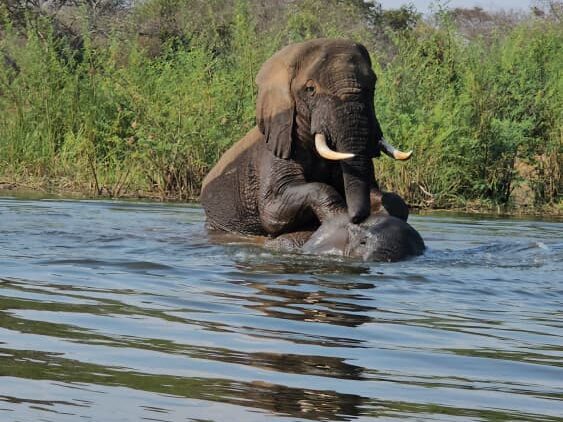
As your boat gently cruises upstream towards the base of Murchison Falls, you’ll pass enormous pods of hippos, basking Nile crocodiles, elephants drinking at the riverbank, buffaloes cooling in the shallows, and countless waterbirds. The closer you approach the falls, the louder the thunder of cascading water becomes until the river disappears into clouds of mist.
In the evening, enjoy a memorable sundowner overlooking the Nile as the African sunset paints the sky in brilliant shades of orange and crimson.
Today’s Highlights
- Early morning wildlife safari.
- Victoria Nile boat cruise.
- Murchison Falls viewed from the river.
- Sunset over the Nile.
Meals: Breakfast, Lunch & Dinner
Day 4: Scenic Flight to Kibale National Park – The Primate Capital of East Africa
After breakfast, transfer to Pakuba Airstrip for a scheduled domestic flight to Kasese, dramatically reducing travel time and allowing you to spend more hours exploring rather than driving.
From Kasese, enjoy a scenic transfer through the foothills of the legendary Rwenzori Mountains to Kibale National Park, one of Africa’s richest tropical rainforests and home to 13 species of primates.
Upon arrival, settle into your forest lodge and enjoy lunch overlooking the lush canopy. In the afternoon, take a guided forest nature walk where you’ll discover towering mahogany trees, colourful butterflies, medicinal plants, orchids, and an astonishing diversity of birds. Listen to the distant calls of chimpanzees while black-and-white colobus monkeys leap effortlessly through the treetops.
As darkness falls, the rainforest comes alive with the sounds of nocturnal wildlife, creating an unforgettable atmosphere.
Why We Fly Today
Rather than spending an entire day driving across western Uganda, this short domestic flight saves several hours, ensuring more time to enjoy Kibale’s spectacular rainforest.
Accommodation
Mid-range
- Turaco Treetops
Meals: Breakfast, Lunch & Dinner
Day 5: Chimpanzee Trekking, Bigodi Wetland & Authentic Community Experience
Wake early to the enchanting sounds of the rainforest before heading to the Kibale National Park Visitor Centre for a comprehensive briefing by experienced Uganda Wildlife Authority rangers.
Your chimpanzee trekking adventure begins as you venture into the ancient forest in search of one of Kibale’s habituated chimpanzee communities. The trek may last from one to four hours depending on the chimpanzees’ movements, but every step reveals the incredible biodiversity of this rainforest.
Beyond chimpanzees, Kibale is home to red-tailed monkeys, L’Hoest’s monkeys, blue monkeys, black-and-white colobus monkeys, olive baboons, forest elephants, and over 375 bird species.
Once you locate the chimpanzees, spend an unforgettable hour observing them as they communicate, groom one another, forage for food, and play high in the forest canopy. Their remarkable intelligence and social behaviour offer a fascinating glimpse into our closest living relatives.
After lunch, continue to the nearby Bigodi Wetland Sanctuary, a community-managed conservation area renowned for its rich birdlife and sustainable tourism initiatives. During a guided walk along wooden boardwalks and forest trails, keep watch for the elusive great blue turaco, papyrus gonolek, hornbills, kingfishers, butterflies, and additional primates.
In the evening, visit a nearby village where local families warmly welcome you into their community. Learn about traditional farming, taste freshly prepared Ugandan dishes, interact with local artisans, and enjoy cultural music and dance performances that celebrate the region’s heritage.
Today’s Highlights
- Chimpanzee trekking in Kibale Forest.
- Bigodi Wetland nature walk
- Exceptional birdwatching.
- Authentic community experience.
- Traditional Ugandan cuisine.
- Cultural performances.
Accommodation: Same lodge as the previous night.
Meals: Breakfast, Lunch & Dinner
Day 6: Queen Elizabeth National Park – Wildlife Safari & The Legendary Kazinga Channel
Wake to the fresh mountain air before enjoying breakfast and departing Kibale National Park for the scenic drive to Queen Elizabeth National Park. The journey winds through picturesque tea plantations, crater lakes, and the dramatic foothills of the Rwenzori Mountains, whose snow-capped peaks often shimmer above the clouds.
Arrive at the park in time for lunch before setting off on an afternoon game drive across the famous Kasenyi Plains, one of Uganda’s finest wildlife-viewing areas. The expansive grasslands support large herds of Uganda kob, attracting predators such as lions and the occasional leopard. Your guide will help you identify the many mammals and birds that inhabit this diverse ecosystem while sharing fascinating insights into their behaviour.
As the afternoon light softens, wildlife becomes increasingly active. Herds of elephants move gracefully across the plains, buffaloes graze in large numbers, warthogs trot through the grasslands with tails held high, while waterbucks, bushbucks, topis, and giant forest hogs are frequently encountered.
Wildlife Highlights
Accommodation
– Buffalo Safari Lodge.
Meals: Breakfast, Lunch & Dinner
Day 7: Ishasha Sector – The Famous Tree-Climbing Lions & Bwindi Impenetrable National Park
Enjoy breakfast as you warm up for a boat cruise along the famous Kazinga Channel before travelling south through the remote Ishasha Sector, internationally renowned for its extraordinary population of tree-climbing lions.
Unlike most lions, Ishasha’s prides regularly climb enormous fig trees to escape insects, enjoy cooler breezes, and observe prey from above. Your guide will carefully search the branches for these remarkable predators while also pointing out elephants, topis, buffaloes, and numerous bird species that inhabit this unique ecosystem.
After a rewarding wildlife experience, continue through the beautiful highlands of southwestern Uganda. Rolling terraced hills, tea plantations, eucalyptus forests, and traditional villages gradually give way to the mist-covered mountains surrounding Bwindi Impenetrable National Park.
The journey itself is spectacular, offering countless opportunities to admire Uganda’s breathtaking scenery and interact with local communities along the way.
Arrive at your lodge during the afternoon. Spend the remainder of the day relaxing while preparing for tomorrow’s once-in-a-lifetime gorilla trekking adventure.
Your guide will explain trekking procedures, recommended clothing, fitness requirements, photography guidelines, and conservation efforts that protect the world’s remaining mountain gorillas.
Highlights
– Search for the famous tree-climbing lions.
– Scenic drive through the Kigezi Highlands.
– Preparation for gorilla trekking.
Accommodation
– Four Gorillas Lodge
Meals: Breakfast, Lunch & Dinner
Day 8: Gorilla Trekking – The Ultimate Wildlife Encounter
Today promises one of the most extraordinary wildlife experiences anywhere on Earth.
Rise early before transferring to the Uganda Wildlife Authority headquarters for registration and an informative briefing by experienced rangers. Small trekking groups are assigned to one of Bwindi’s habituated gorilla families, ensuring a responsible and intimate wildlife encounter.
Your trek through the ancient rainforest may last anywhere from two to eight hours depending on the gorillas’ movements. Every step through the dense vegetation reveals the incredible biodiversity of Bwindi, a UNESCO World Heritage Site that shelters more than half of the world’s remaining mountain gorillas.
Along the way, your guide may point out colourful butterflies, rare orchids, medicinal plants, forest birds, black-and-white colobus monkeys, L’Hoest’s monkeys, and signs of forest elephants.
Then comes the unforgettable moment.
As the forest quietly opens before you, a family of mountain gorillas appears among the vegetation. For one magical hour, you’ll observe these gentle giants feeding, grooming, playing, and nurturing their young. Their expressive eyes, peaceful behaviour, and close family bonds create an emotional encounter that few experiences can equal.
After descending from the forest, receive your official gorilla trekking certificate before returning to your lodge for relaxation and celebration.
What Makes Gorilla Trekking Special?
– One of the world’s rarest wildlife experiences.
– Strictly limited visitor numbers ensure an exclusive encounter.
– Directly supports gorilla conservation and local communities.
– An unforgettable photographic and emotional experience.
Accommodation: Same lodge as the previous night.
Meals: Breakfast, Lunch & Dinner
Day 9: Batwa Cultural Experience & Lake Bunyonyi
Following a leisurely breakfast, visit the Batwa Community, one of East Africa’s oldest indigenous peoples and the original inhabitants of the forests surrounding Bwindi.
Led by Batwa guides, you’ll gain fascinating insights into their traditional way of life before the creation of Uganda’s national parks. Learn ancient forest survival techniques, discover medicinal plants, witness traditional fire-making demonstrations, enjoy music and dance performances, and listen to captivating stories passed down through generations.
This authentic cultural experience provides an important understanding of both conservation and the rich human history of the region.
Later, continue to the spectacular Lake Bunyonyi, often described as one of Africa’s most beautiful lakes. Surrounded by terraced hills and dotted with 29 lush islands, Lake Bunyonyi is renowned for its peaceful atmosphere, cool climate, and exceptional scenery.
In the afternoon, board a traditional dugout canoe or modern motorboat to explore several of the lake’s islands while learning about their unique histories and local legends.
As evening approaches, relax beside the tranquil waters while enjoying one of Uganda’s most breathtaking sunsets.
Accommodation
– Lake Bunyonyi Eco Resort
Meals: Breakfast, Lunch & Dinner
Day 10: Lake Mburo National Park – Walking Safari & Ankole Cultural Experience
After breakfast, depart Lake Bunyonyi for Lake Mburo National Park, Uganda’s smallest savannah national park but one of its most charming and unique wildlife destinations.
Unlike most parks in East Africa, Lake Mburo offers the rare opportunity to experience the wilderness on foot. Accompanied by an armed Uganda Wildlife Authority ranger, enjoy a guided walking safari through open grasslands where zebras graze peacefully alongside impalas, giraffes, elands, topis, and buffaloes.
Walking quietly through the African bush provides a completely different perspective from a traditional game drive, allowing you to appreciate animal tracks, birds, plants, insects, and the finer details of the ecosystem.
Following lunch, enjoy an afternoon game drive and later a relaxing boat cruise on Lake Mburo, where hippos, crocodiles, African fish eagles, kingfishers, and countless waterbirds can be observed at close range.
As evening approaches, visit a nearby Bahima pastoral community, famous for their magnificent long-horned Ankole cattle. Meet local families, learn traditional cattle-keeping practices, participate in milking demonstrations, sample fresh milk and local delicacies, and hear stories about the deep cultural significance of livestock in Ankole society.
Conclude the evening around a campfire beneath the African stars before returning to your lodge.
End of the Uganda Chapter
By the end of Day 10, you will have experienced Uganda’s extraordinary diversity—from tropical rainforests and mountain gorillas to wildlife-rich savannahs, volcanic lakes, vibrant cultures, and unforgettable community encounters. This carefully paced journey showcases why Uganda is known as the Pearl of Africa.
Days 11–12: From the Pearl of Africa to Tanzania’s Legendary Safari Circuit
After ten unforgettable days discovering Uganda’s rainforests, mountain gorillas, wildlife-filled savannahs, and welcoming communities, your expedition now continues into Tanzania—a country renowned for its endless plains, enormous wildlife populations, ancient baobab trees, vibrant Maasai culture, and some of the world’s greatest safari destinations.
Day 11: Lake Mburo National Park – Uganda Equator – Flight to Arusha, Tanzania
Morning in the African Wilderness
Wake before sunrise to the soothing sounds of birdsong echoing across Lake Mburo National Park. The crisp morning air and golden light create one final opportunity to appreciate Uganda’s beautiful savannah before your journey continues.
After breakfast, enjoy a leisurely departure from the park as your guide shares stories about Uganda’s conservation successes and the unique ecosystems you’ve explored over the past ten days.
The drive toward Entebbe passes through rolling Ankole cattle country, where enormous long-horned Ankole cattle graze peacefully against a backdrop of emerald hills and scattered acacia trees.
Uganda Equator Experience
Late in the morning, arrive once again at the famous Uganda Equator Monument.
This iconic landmark marks the point where the Northern and Southern Hemispheres meet.
Take time to:
– Capture memorable photographs standing in both hemispheres.
– Watch the fascinating Equator water experiment demonstrating the Coriolis effect.
– Browse locally made crafts and souvenirs.
– Enjoy freshly brewed Ugandan coffee.
– Learn about the geographical significance of the Equator from your guide.
The stop also provides an excellent opportunity to purchase handcrafted gifts supporting local artisans before leaving Uganda.
Lunch Overlooking Lake Victoria
Continue to Entebbe where you’ll enjoy a relaxed lunch at a lakeside restaurant overlooking the tranquil waters of Lake Victoria, Africa’s largest freshwater lake.
Watch traditional fishing boats glide across the water while African fish eagles soar overhead searching for prey.
This peaceful setting offers the perfect farewell to Uganda.
Flight to Tanzania
Following lunch, transfer to Entebbe International Airport for your scheduled flight to Kilimanjaro International Airport.
As your aircraft climbs above Uganda, enjoy spectacular aerial views of forests, lakes, mountains and the winding Nile River before crossing into northern Tanzania.
Upon arrival, you’ll be warmly welcomed by your Tanzanian safari guide who will transfer you to the vibrant safari town of Arusha, the gateway to Tanzania’s famous Northern Safari Circuit.
Situated beneath the towering slopes of Mount Meru and within sight of Africa’s highest mountain, Mount Kilimanjaro, Arusha is a bustling town where safari adventures begin.
After checking into your lodge, relax beside the swimming pool or stroll through beautifully landscaped gardens while preparing for the next chapter of your East African expedition.
As evening falls, enjoy a delicious dinner featuring fresh Tanzanian cuisine accompanied by a briefing about the remarkable wildlife adventures awaiting you.
Accommodation
Four Points by Sheraton Arusha
Meals: Breakfast, Lunch & Dinner
Day 12: Tarangire National Park – Land of Giants
Following an early breakfast, depart Arusha and journey south toward Tarangire National Park, one of Tanzania’s most underrated safari treasures.
The approximately two-hour drive gradually reveals changing landscapes—from fertile farmlands and colourful Maasai villages to open savannahs dominated by colossal baobab trees that have stood for centuries.
Named after the life-giving Tarangire River, this remarkable park becomes a refuge for wildlife during the dry season when thousands of animals migrate here in search of permanent water.
Morning Game Drive
Entering the park, you’ll immediately notice its dramatic scenery.
Towering baobabs rise above golden grasslands while ancient acacia woodlands provide shelter for countless wildlife species.
Tarangire is internationally famous for its enormous elephant population.
It is not uncommon to encounter family herds of more than one hundred elephants crossing the road together.
Watch playful calves walking beneath the protection of their mothers while massive bulls display impressive ivory tusks.
Throughout the morning game drive, your experienced guide will search for:
– African elephants
– Lions
– Leopards
– Cheetahs (occasionally)
– Buffaloes
– Masai giraffes
– Plains zebras
– Blue wildebeest
– Impalas
– Grant’s gazelles
– Fringe-eared oryx
– Elands
– Warthogs
Every game drive is different, ensuring an exciting and unpredictable safari experience.
Picnic Lunch in the Wilderness
Around midday, stop at a scenic picnic site overlooking the Tarangire River.
As you enjoy your freshly prepared lunch, observe wildlife gathering below to drink.
Troops of vervet monkeys often entertain visitors while colourful birds move through nearby trees.
Your guide will explain how the river sustains one of East Africa’s richest wildlife ecosystems.
Afternoon Safari Adventure
Continue exploring different regions of the park during the cooler afternoon hours when predators become increasingly active.
Large prides of lions are frequently encountered resting beneath acacia trees before beginning their evening hunts.
Lucky visitors may also observe leopards relaxing on tree branches or stalking prey through dense vegetation.
Tarangire is equally spectacular for bird enthusiasts.
With over 550 recorded bird species, possibilities include:
– Yellow-collared lovebirds
– Kori bustards
– Secretary birds
– Martial eagles
– African fish eagles
– White-bellied go-away birds
– Lilac-breasted rollers
– Northern pied babblers
– Hornbills
– Bee-eaters
Photographers will especially appreciate Tarangire’s extraordinary landscapes.
The combination of giant baobab trees, golden light, dramatic skies, and abundant wildlife creates some of Africa’s most iconic safari images.
As sunset approaches, return to your lodge where you can relax with a refreshing drink while watching wildlife visit nearby waterholes.
Dinner is served beneath the African stars, accompanied by the distant sounds of elephants rumbling across the plains.
Why Tarangire is Special
Although often overshadowed by the Serengeti, Tarangire offers a more intimate safari experience with fewer vehicles and remarkable wildlife concentrations.
Its iconic baobab trees, vast elephant herds, and peaceful atmosphere make it one of Tanzania’s hidden gems.
Guests frequently describe Tarangire as one of the most photogenic national parks in East Africa.
Accommodation
– Tarangire Sopa Lodge
Meals: Breakfast, Lunch & Dinner
Days 13–15: Lake Manyara, Maasai Culture & the Serengeti
The Tanzanian chapter now moves deeper into the legendary Northern Safari Circuit. From the lush shores of Lake Manyara to the dramatic landscapes of the Great Rift Valley and finally the seemingly endless plains of the Serengeti, these three days introduce you to some of Africa’s most iconic scenery and wildlife.
This section deliberately combines wildlife, culture, photography and adventure, while keeping the pace comfortable enough to appreciate each destination.
DAY 13: LAKE MANYARA NATIONAL PARK — FOREST, LAKE & WILDLIFE
Morning: From Tarangire to Lake Manyara
After breakfast, depart your Tarangire lodge and travel northwest toward Lake Manyara National Park.
The drive is relatively short compared with many safari transfers, allowing you to arrive with plenty of time for exploration.
As you approach the park, the landscape changes dramatically. Dry savannah gradually gives way to lush vegetation fed by underground springs. Towering trees form a green canopy, while the Great Rift Valley escarpment rises dramatically in the distance.
Lake Manyara itself stretches along the base of the escarpment, creating an extraordinary combination of forest, wetlands, open plains and alkaline lake.
Morning Game Drive
Enter the park with your guide and begin exploring its diverse habitats.
The first section of the park takes you through lush groundwater forests where enormous fig and mahogany trees create a cool, shaded environment.
Watch carefully among the branches for:
– Blue monkeys
– Vervet monkeys
– Baboons
– Sykes’ monkeys
– Hornbills
– Turacos
– Silvery-cheeked hornbills
As you move toward the open plains, the forest gradually gives way to grasslands where giraffes, zebras, wildebeest, buffaloes and elephants may appear.
Lake Manyara is particularly famous for its elephants, which can often be observed feeding peacefully near the forest margins.
The Famous Tree-Climbing Lions
One of Lake Manyara’s most intriguing attractions is its population of tree-climbing lions.
Although lions are capable climbers throughout Africa, certain prides in this region have developed a reputation for spending considerable time resting in trees.
Your guide will carefully scan large acacia trees and branches for a sleeping lion high above the ground.
If you are fortunate enough to find them, watching a lion casually stretched across a tree branch while looking down over the savannah is an unforgettable photographic opportunity.
Lake Manyara’s Birdlife
The park is also an excellent destination for birdwatchers.
Depending on the season, you may encounter:
– Greater and lesser flamingos
– African fish eagles
– Saddle-billed storks
– Marabou storks
– Yellow-billed storks
– Grey crowned cranes
– Pelicans
– Herons
– Egrets
– Kingfishers
The lake’s shallow waters attract enormous concentrations of birds, particularly when water levels and seasonal conditions are favourable.
Lunch & Rift Valley Viewpoint
After your game drive, enjoy lunch at a carefully selected lodge or scenic location overlooking the Great Rift Valley.
The escarpment provides a spectacular backdrop, rising dramatically above the valley floor.
Take some time to appreciate the sheer geological scale of the landscape.
The Great Rift Valley is one of Earth’s most remarkable geological features, stretching thousands of kilometres across eastern Africa.
Afternoon: Maasai Cultural Experience
After lunch, leave the wildlife behind temporarily and enter the cultural heart of northern Tanzania.
Visit a Maasai community where you’ll be welcomed by local residents and introduced to traditional Maasai life.
Rather than simply watching a staged performance, Ahakaro Safaris’ experience is designed around respectful interaction and learning.
Depending on the community and activities available, you may learn about:
– Traditional Maasai homes known as manyattas
– Cattle keeping
– Traditional clothing and beadwork
– Indigenous medicinal plants
– Maasai children’s education
– Traditional food
– Marriage customs
– Community leadership
– Conservation and coexistence with wildlife
You’ll have the opportunity to interact with local families and artisans and purchase handmade beadwork directly from community members if you wish.
A Cultural Evening
As the afternoon turns golden, enjoy traditional Maasai songs and dancing.
The rhythmic singing, energetic jumping and distinctive clothing create a memorable cultural experience—but more importantly, your visit contributes to community-based tourism and provides an opportunity to learn directly from the people who share this landscape with wildlife.
Return to your lodge in the evening.
Today’s Experience
Wildlife + landscape + culture
You will have experienced three very different sides of northern Tanzania in one day: the wildlife-rich forests of Manyara, the geological drama of the Rift Valley, and the living traditions of the Maasai.
Accommodation
– Ngorongoro Farm House
Meals: Breakfast, Lunch & Dinner
DAY 14: NGORONGORO HIGHLANDS – SERENGETI
Into the Heart of the Great Migration Ecosystem
Today marks the beginning of one of the most anticipated chapters of your expedition.
After an early breakfast, depart toward the Ngorongoro Conservation Area.
The road climbs through the spectacular highlands, where fertile volcanic soils support farms, forests and small communities.
As you rise higher, the landscape becomes cooler and greener.
Optional: Ngorongoro Crater Viewpoint
Before continuing toward the Serengeti, stop at a viewpoint overlooking the enormous Ngorongoro Crater.
From above, the crater resembles a gigantic natural amphitheatre.
Its floor contains grasslands, wetlands, woodland and a permanent water supply, creating ideal conditions for wildlife.
On a clear day, you can see enormous herds of animals moving across the crater floor far below.
This is an important distinction in the itinerary: rather than spending an entire day descending into the crater, today’s route allows you to appreciate the crater from above and preserve more time for the Serengeti.
Entering the Serengeti
Continue westward through the Ngorongoro Conservation Area.
Gradually, the landscape becomes increasingly wild.
Human settlements disappear.
The horizon expands.
Golden grasslands stretch seemingly forever.
Then comes one of the most exciting moments of the journey—the entrance into Serengeti National Park.
The name Serengeti originates from the Maasai word Siringit, meaning “endless plains.”
The name could hardly be more appropriate.
Afternoon Serengeti Game Drive
Your safari vehicle leaves the main route and begins exploring the surrounding plains.
Almost immediately, the landscape feels different from the parks you’ve already visited.
The Serengeti is vast, open and seemingly limitless.
Depending on the season, you may encounter enormous concentrations of:
– Wildebeest
– Zebras
– Thomson’s gazelles
– Grant’s gazelles
– Buffaloes
– Giraffes
– Elands
– Impalas
And where herbivores gather, predators are never far away.
Your guide will carefully search for:
Lions
Serengeti lions are frequently seen resting beneath trees or surveying open grasslands.
Cheetahs
The open plains provide ideal habitat for cheetahs, especially where visibility is excellent.
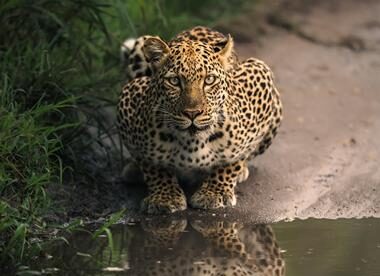
Leopards
These elusive cats often rest in large acacia trees or near riverine areas.
Hyenas
Highly social spotted hyenas can frequently be found around kills or resting near their dens.
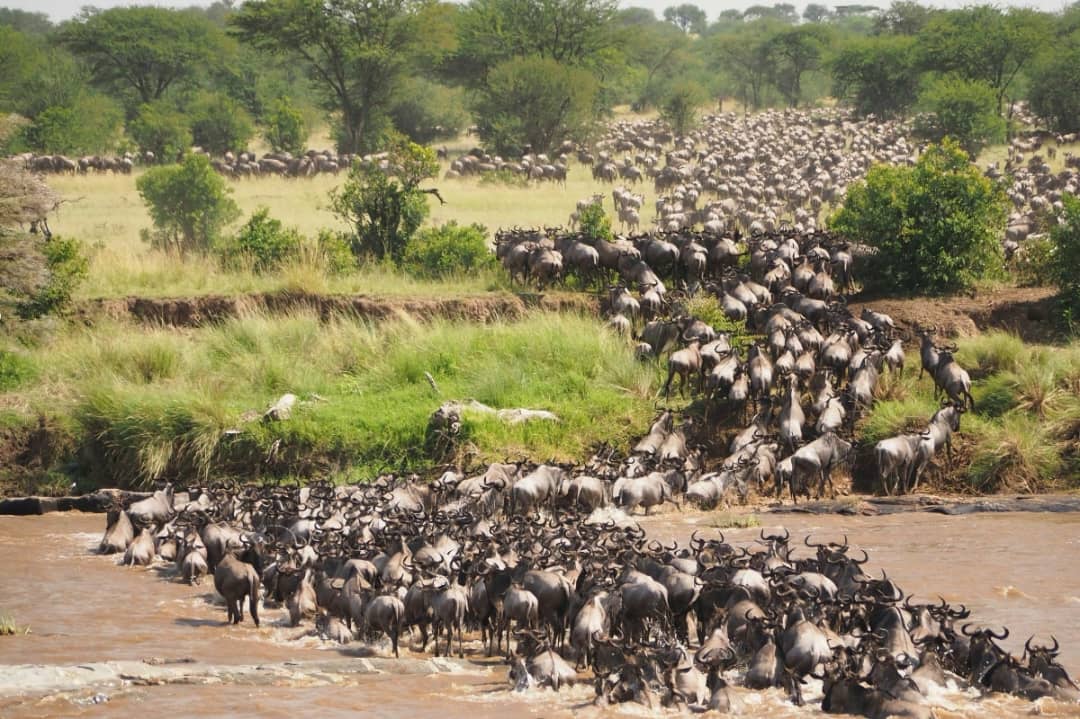
The Great Migration
If your visit coincides with the migration cycle, you may encounter spectacular concentrations of wildebeest and zebra.
The Great Migration is not a single event occurring on one fixed date. It is a continuous movement driven by rainfall, fresh grass and water availability.
Depending on the month and the location of the herds, you may witness:
– Huge herds crossing open plains.
– Young wildebeest calves.
– Predators following migrating herds.
– Dramatic river crossings during the appropriate season.
– Dust rising behind thousands of moving animals.
Your guide will adapt the safari route according to current wildlife movements.
This flexibility is particularly important because wildlife does not follow a tourist timetable.
Sunset in the Serengeti
As evening approaches, find a scenic viewpoint for a classic African sundowner.
Sit above the plains as the setting sun turns the grasslands golden.
Elephants may move across the horizon.
Giraffes appear as silhouettes.
Birds return to their nesting places.
And somewhere in the distance, a lion may begin calling.
This is the Serengeti at its most magical.
Return to camp for dinner and an evening beneath the African sky.
Accommodation
– Serengeti Serena Safari Lodge
Meals: Breakfast, Lunch & Dinner
DAY 15: FULL-DAY SERENGETI SAFARI — THE GREAT WILDLIFE THEATRE
Today is dedicated entirely to the Serengeti.
There is no need to pack your bags or spend the day travelling.
Instead, wake before sunrise and prepare for a full day immersed in one of Earth’s greatest wildlife ecosystems.
OPTIONAL SUNRISE HOT-AIR BALLOON SAFARI
For travellers seeking an extraordinary adventure, this morning can begin with an optional hot-air balloon safari.
Before dawn, you’ll be transferred to the launch site.
As the balloon rises into the sky, the Serengeti slowly awakens below.
From above, you’ll see the landscape in a way that cannot be experienced from a safari vehicle:
– Herds of wildebeest moving across the plains.
– Elephants appearing as tiny silhouettes.
– Giraffes moving between acacia trees.
– Rivers winding through the grasslands.
– The sun rising over an endless horizon.
After landing, enjoy a traditional bush breakfast before rejoining your safari vehicle.
Balloon safari is optional and comes at an additional cost.
Full-Day Wildlife Exploration
If you prefer a traditional safari morning, depart at sunrise with your guide.
Early morning is one of the best times for predator sightings.
Cool temperatures encourage lions, cheetahs and leopards to remain active.
Your guide will read tracks, alarm calls and animal behaviour to determine where wildlife may be concentrated.
Predator Tracking
Serengeti is one of Africa’s premier destinations for observing large predators.
Lions
Watch prides interact, hunt, rest and care for cubs.
Young lions may be particularly playful in the early morning.
Cheetahs
Cheetahs prefer open terrain where they can use their extraordinary speed to pursue prey.
Your guide may position the vehicle at a respectful distance and allow you to watch the animal’s behaviour without disturbance.
Leopards
Search riverine woodland and large trees for this elusive predator.
A leopard resting on a branch overlooking the Serengeti is one of the most coveted safari sightings.
Spotted Hyenas
Observe these intelligent social predators around dens and hunting grounds.
Their complex social structures make them fascinating subjects for photography and guiding.
Midday Wilderness Picnic
Rather than returning to the lodge, enjoy a carefully prepared picnic in the wilderness.
Your guide will select a safe location where you can eat while appreciating the surrounding landscape.
The midday period is generally warmer, so wildlife may become less active.
This is a perfect time to relax, photograph landscapes and learn more about Serengeti ecology from your guide.
Afternoon: Follow the Wildlife
As temperatures begin to fall, continue exploring.
Your guide will select the afternoon route according to recent sightings and seasonal wildlife movements.
This could take you toward:
– Kopjes
– River valleys
– Open grasslands
– Seasonal waterholes
– Woodlands
The famous Serengeti kopjes—large granite rock formations rising above the plains—provide important shelter for reptiles, birds and predators.
Lions frequently use these elevated rocks as lookout points.
Photography Opportunities
For photographers, today provides exceptional opportunities to capture:
– Lions against golden grass.
– Cheetahs in open plains.
– Elephant herds beneath acacia trees.
– Giraffes silhouetted against the sunset.
– Wildebeest and zebras moving across the horizon.
– Birds of prey hunting.
– Serengeti landscapes beneath dramatic African skies.
Your safari vehicle can be positioned carefully to maximize photographic opportunities while respecting wildlife regulations.
Final Serengeti Sunset
Before returning to camp, stop for your final Serengeti sundowner.
Raise a glass to three unforgettable days of Tanzanian wildlife adventures.
As darkness arrives, the Serengeti changes character.
The daytime sounds disappear and are replaced by the calls of nocturnal animals.
From your camp, you may hear distant hyenas calling, lions roaring and insects humming around the surrounding bush.
It is the perfect ending to your Serengeti chapter.
Why Three Serengeti Days?
A single afternoon in the Serengeti can provide incredible sightings, but three days dramatically increases the opportunity to explore different habitats and follow wildlife movements.
More importantly, it allows the journey to feel like a genuine expedition rather than a race between attractions.
You have time to slow down, watch animal behaviour, photograph landscapes and simply experience the wilderness.
Accommodation
– Serengeti Serena Safari Lodge
Meals: Breakfast, Lunch & Dinner
DAY 16: SERENGETI – FINAL MORNING SAFARI – NGORONGORO HIGHLANDS
A Final Sunrise in the Serengeti
Your final morning in the Serengeti begins before sunrise.
There is something particularly special about experiencing the plains in the early morning when the air is cool and the first light begins to illuminate the horizon.
Depart camp with your safari guide and make the most of your final hours in this legendary ecosystem.
This final game drive is deliberately kept flexible. Rather than following a fixed route, your guide will use recent wildlife information to determine where to explore.
You may encounter:
– Lions returning from a night hunt.
– Cheetahs scanning the plains for prey.
– Hyenas around their dens.
– Elephants moving between feeding areas.
– Giraffes browsing on acacia trees.
– Wildebeest and zebras beginning their morning grazing.
– Grant’s and Thomson’s gazelles.
– Ostriches striding across the grasslands.
If you’re travelling during the migration period, your guide will also monitor the location of the herds and adjust the route accordingly.
Breakfast in the Wilderness
Return to camp for a relaxed breakfast.
Enjoy your final views of the Serengeti while reflecting on the remarkable wildlife experiences of the previous days.
There is no need to rush.
The itinerary intentionally allows a slower morning so that the transition from the Serengeti feels like part of the adventure rather than simply a transfer.
Journey Toward Ngorongoro
After breakfast, begin your journey east toward the Ngorongoro Conservation Area.
The landscape gradually changes.
The open Serengeti plains give way to rolling grasslands and then increasingly dramatic volcanic highlands.
The journey offers excellent opportunities to observe rural Tanzania, including traditional Maasai settlements and herders moving cattle across the landscape.
Your guide will explain the remarkable relationship between wildlife conservation, pastoralism and agriculture in the Ngorongoro region.
Ngorongoro Highlands
As you climb toward the highlands, temperatures become noticeably cooler.
The scenery becomes greener, with forests covering the slopes of ancient volcanic mountains.
You will eventually reach the rim of the Ngorongoro Crater.
Standing above the enormous crater is an unforgettable experience.
Far below, the crater floor stretches for kilometres, containing grasslands, wetlands, woodland and a shimmering soda lake.
Wildlife can sometimes be seen moving across the distant plains.
Crater Rim Experience
Spend time at a carefully selected viewpoint overlooking the crater.
Take photographs while your guide explains how volcanic activity shaped the region millions of years ago.
The crater is not simply a beautiful landscape—it is a living ecosystem supporting an extraordinary concentration of wildlife.
Evening at the Highland Lodge
Continue to your lodge on or near the crater rim.
After several days in the warm Serengeti, the cool highland climate offers a refreshing change.
Spend the evening beside a fireplace, relax with a drink, or simply enjoy the silence of the surrounding forest.
Dinner is served in a peaceful highland setting as you prepare for tomorrow’s full-day crater adventure.
Accommodation
– Ngorongoro Farm House
Meals: Breakfast, Lunch & Dinner
DAY 17: NGORONGORO CRATER – AFRICA’S NATURAL WILDLIFE AMPHITHEATRE
Early Morning Descent
Today is one of the great wildlife days of the expedition.
Wake early and descend into the Ngorongoro Crater while the morning mist still hangs above the rim.
The road winds down through the crater walls before suddenly opening onto the vast floor below.
The landscape is extraordinary.
Open grasslands stretch toward distant forests while wetlands glisten in the early sunlight.
Wildlife is already active.
Crater Wildlife Safari
Spend the day exploring different habitats across the crater floor.
The Ngorongoro Crater supports an exceptional concentration of wildlife within a relatively compact area.
Your guide will search for:
Black Rhinoceros
One of the most exciting possibilities is encountering the critically endangered black rhinoceros.
Ngorongoro is one of Tanzania’s important refuges for these magnificent animals.
Because they are highly protected and closely monitored, sightings are never guaranteed, but the possibility makes every game drive exciting.
Lions
The crater supports a healthy population of lions.
Watch prides resting in the grasslands or stalking prey across open plains.
Elephants
Although elephants are more frequently associated with forests and open savannah elsewhere in Tanzania, the crater provides important habitat for them.
Buffaloes
Large herds may be encountered grazing across the crater floor.
Hippos
Visit the crater’s wetlands where hippos spend much of the day partially submerged.
Hyenas
These intelligent predators are frequently encountered around the grasslands.
Zebras & Wildebeest
Large herds move across the crater floor, particularly around the open grazing areas.
Lake Magadi
One of the crater’s most recognizable landmarks is Lake Magadi, a shallow alkaline lake that changes dramatically according to season and water levels.
When conditions are favourable, thousands of flamingos may gather along its edges.
The sight of pink flamingos against the blue-green water and volcanic landscape is one of the crater’s most memorable scenes.
Picnic Lunch in the Crater
Enjoy a packed lunch at a designated picnic location.
The surrounding landscape provides an unforgettable setting, although your guide will ensure you remain in an appropriate and safe area.
After lunch, continue exploring.
The afternoon light can be particularly beautiful for photography as animals become more active.
Understanding the Crater Ecosystem
Throughout the day, your guide will explain how the crater functions as a largely self-contained ecosystem.
The crater walls create a natural boundary, while permanent water sources and fertile soils support wildlife throughout much of the year.
This extraordinary ecological balance is one of the reasons Ngorongoro is recognized internationally for its natural importance.
Ascending the Crater
In the late afternoon, begin the climb back toward the crater rim.
As you rise, stop at viewpoints where possible to admire the enormous landscape you have just explored.
From the rim, the crater gradually disappears beneath the evening mist.
Return to your lodge for dinner.
Accommodation: Same as Day 16.
Meals: Breakfast, Lunch & Dinner
DAY 18: MATERUNI WATERFALLS – CHAGGA CULTURE – COFFEE EXPERIENCE
From Wildlife to Mountain Adventure
Today brings a dramatic change of scenery.
After breakfast, leave the Ngorongoro Highlands and travel toward the foothills of Mount Kilimanjaro.
Rather than spending another day on a long conventional safari transfer, today’s route is built around a cultural and hiking experience in the lush Kilimanjaro foothills.
The landscape gradually transforms into fertile farmland.
Banana plantations become increasingly common, while small villages appear among the green slopes.
Arrival in Materuni Village
Reach Materuni, a beautiful village inhabited by the Chagga people on the lower slopes of Mount Kilimanjaro.
Meet your local guide before beginning your hike toward Materuni Waterfall.
The walk takes you through a lush agricultural landscape filled with:
– Banana plantations
– Coffee gardens
– Tropical vegetation
– Avocado trees
– Local farms
– Streams
– Forested slopes
Your local guide will explain how farming has shaped the lives of communities living around Kilimanjaro.
Materuni Waterfall Hike
Follow the forest trail toward the impressive waterfall.
The hike is an adventure in itself.
As you walk, listen to the sounds of flowing water and tropical birds while enjoying views across the surrounding countryside.
Eventually the vegetation opens to reveal Materuni Waterfall, where water plunges dramatically down a rocky cliff into a natural pool.
Depending on local conditions and safety guidance, visitors may be able to approach the pool for photographs or enjoy the refreshing atmosphere around the falls.
Take time to relax, photograph the scenery and appreciate the extraordinary contrast between the dry safari landscapes and the lush mountain environment.
Traditional Chagga Coffee Experience
After returning to the village, participate in an authentic coffee experience.
Tanzania is famous for its Arabica coffee, and the slopes of Mount Kilimanjaro provide ideal conditions for cultivation.
Your hosts will demonstrate the traditional process:
- Harvesting
Learn how ripe coffee cherries are identified and picked.
- Processing
Discover how the beans are separated and prepared.
- Drying
Observe how coffee beans are traditionally dried before roasting.
- Roasting
Watch freshly harvested beans transform as they are roasted over a traditional fire.
- Grinding
Participate in grinding the roasted beans using traditional methods.
- Brewing
Finally, enjoy a fresh cup of locally produced Tanzanian coffee.
This is more than a coffee tasting—it is an opportunity to connect with local farmers and understand the people behind one of Tanzania’s most important agricultural products.
Chagga Cultural Lunch
Enjoy a traditional lunch featuring locally produced ingredients.
Depending on the community and season, dishes may include:
– Plantains
– Beans
– Fresh vegetables
– Local meat
– Traditional sauces
– Fresh fruit
– Locally produced coffee
Your hosts can explain the origins of the dishes and the importance of agriculture within Chagga culture.
Optional Kilimanjaro Adventure
For guests seeking additional adventure, an optional short hiking experience around the lower slopes of Mount Kilimanjaro can be arranged, subject to local conditions and available time.
This is not a summit expedition.
Instead, it provides a taste of the mountain environment without committing to a multi-day climb.
For serious hikers, a separate Kilimanjaro climbing extension can be added before the Zanzibar portion of the expedition.
Evening in Moshi
After the day’s adventure, transfer to Moshi, the principal gateway for Mount Kilimanjaro expeditions.
Check into your hotel and relax.
The evening is intentionally free.
You may choose to:
– Enjoy a massage.
– Relax by the swimming pool.
– Explore Moshi town.
– Visit a local restaurant.
– Prepare for the flight to Zanzibar.
Dinner marks the end of your mainland Tanzania adventure.
Tomorrow, the expedition changes completely.
The savannahs and volcanic mountains give way to turquoise Indian Ocean waters, white-sand beaches, Swahili culture and tropical islands.
Accommodation
– Parkview Hotel
Meals: Breakfast, Lunch & Dinner
THE JOURNEY NOW TURNS TOWARD ZANZIBAR
DAY 19: MOSHI → ZANZIBAR — FROM THE MOUNTAINS TO THE INDIAN OCEAN
Morning: A Final Look at Mount Kilimanjaro
Wake in Moshi to the possibility of one final view of Mount Kilimanjaro.
On clear mornings, the mountain dominates the horizon, its enormous volcanic slopes rising above the surrounding plains.
Enjoy breakfast at your hotel before transferring to Kilimanjaro International Airport for your short flight to Zanzibar.
The flight saves considerable road time and allows you to arrive on the island ready to explore rather than spending an entire day travelling.
Flight to Zanzibar
As the aircraft approaches Zanzibar, the landscape below changes dramatically.
The mainland gives way to brilliant blue Indian Ocean waters dotted with fishing boats and small islands.
Then the white beaches appear.
Palm trees line the coastline while turquoise lagoons surround the island.
Welcome to Zanzibar—the Spice Island.
Arrival & Beach Transfer
Upon arrival at Abeid Amani Karume International Airport, your Zanzibar representative will welcome you and transfer you to your chosen beach resort.
Depending on your accommodation location, the transfer will take you through villages, coconut plantations, markets and local communities.
Your first impression of Zanzibar will be very different from the safari landscapes of Uganda and Tanzania.
Here, the rhythm is slower.
The air is warm.
The scent of spices drifts through the villages.
And the Indian Ocean becomes the centre of daily life.
Afternoon: Resort & Beach Exploration
After checking into your accommodation, enjoy a relaxed afternoon.
You may choose to:
– Swim in the Indian Ocean.
– Relax beside the pool.
– Walk along the beach.
– Try kayaking.
– Enjoy a spa treatment.
– Explore the nearby village.
– Simply rest after the long expedition.
For couples and honeymooners, this is an ideal opportunity to slow down and enjoy private time together.
Sunset on the Indian Ocean
In the late afternoon, walk down to the beach to watch your first Zanzibar sunset.
Traditional wooden fishing boats slowly return toward shore while dhows move across the horizon.
As the sun sinks into the Indian Ocean, the sky changes from gold to orange and finally deep purple.
Enjoy a welcome cocktail or fresh tropical juice while listening to the sound of waves along the shore.
This is the beginning of your island chapter.
Accommodation
– Zanzibar Serena Hotel
Meals: Breakfast, Lunch & Dinner
DAY 20: STONE TOWN, SPICE ISLAND & SWAHILI CULTURE
Today reveals the historical and cultural soul of Zanzibar.
While the beaches are spectacular, Zanzibar’s true character can be discovered in its people, architecture, cuisine, traditions and centuries-old connection to the Indian Ocean.
Morning: Stone Town Walking Tour
After breakfast, travel to Stone Town, the historic heart of Zanzibar.
The old city is a maze of narrow streets, carved wooden doors, small markets, mosques, courtyards and historic buildings.
Stone Town reflects centuries of interaction between African, Arab, Persian, Indian and European cultures.
Your local guide will take you through the historic streets while explaining how Zanzibar became an important centre of trade across the Indian Ocean.
Historic Zanzibar
During your walking tour, explore landmarks such as:
House of Wonders
Admire one of Zanzibar’s most recognizable historic buildings from the exterior and learn about its importance in the island’s history.
Old Fort
Explore the historic fortifications built during the island’s complex history and discover the cultural activities that now take place within the area.
Darajani Market
Enter one of Zanzibar’s busiest markets.
Here you’ll find:
– Fresh tropical fruits.
– Fish.
– Spices.
– Vegetables.
– Local foods.
– Handmade products.
– Traditional clothing.
The market offers a fascinating glimpse into everyday island life.
The Famous Zanzibar Doors
One of Stone Town’s most beautiful details is its traditional carved wooden doors.
Your guide will point out different architectural influences and explain how door designs reflected the wealth, profession and cultural background of their owners.
For photographers, these doors provide wonderful opportunities to capture Zanzibar’s unique architectural identity.
Swahili Lunch
Enjoy a traditional Swahili lunch at a carefully selected local restaurant.
Depending on the menu, dishes may include:
– Coconut rice.
– Spiced rice.
– Fresh seafood.
– Grilled fish.
– Coconut curry.
– Chapati.
– Plantains.
– Tropical fruit.
Zanzibar’s cuisine reflects its position at the crossroads of African, Arabian, Indian and Persian culinary traditions.
Afternoon: Spice Farm Experience
After lunch, leave Stone Town and travel into the lush interior of Zanzibar.
The island’s nickname—Spice Island—comes from its long history of growing and trading spices.
At a local spice farm, your guide will introduce you to plants used in everyday cooking and traditional medicine.
You may encounter:
– Cloves.
– Cinnamon.
– Cardamom.
– Vanilla.
– Nutmeg.
– Black pepper.
– Lemongrass.
– Turmeric.
– Ginger.
Rather than simply seeing packaged spices in a shop, you’ll learn how they grow.
You can smell fresh cinnamon bark, taste tropical fruit and discover how spices are harvested and processed.
The Zanzibar Fruit Experience
The spice farm experience can also introduce you to tropical fruits grown on the island.
Depending on the season, you may taste:
– Jackfruit.
– Coconut.
– Pineapple.
– Mango.
– Passion fruit.
– Papaya.
– Banana.
Your local guide will explain how these products contribute to local livelihoods.
Traditional Coconut Experience
Watch local farmers demonstrate traditional coconut harvesting techniques.
You may also learn how coconuts are used to produce:
– Cooking oil.
– Coconut milk.
– Rope.
– Building materials.
– Food.
– Traditional products.
The experience provides an authentic glimpse into island life beyond the resorts.
Evening: Sunset Dhow Cruise
As the afternoon begins to fade, head toward the coast for a traditional Zanzibar dhow cruise.
Dhows have been central to Indian Ocean trade for centuries.
Board the wooden vessel and sail along the coast as the sun begins to descend.
The experience is deliberately slow.
There is no rush.
Enjoy the ocean breeze while watching
– Fishing boats returning to shore.
– Seabirds flying over the water.
– Traditional dhows crossing the horizon.
– The changing colours of the African sky.
As the sun disappears beneath the horizon, enjoy refreshments on board.
Dinner by the Ocean
Return to shore and enjoy a relaxed dinner overlooking the Indian Ocean.
Fresh seafood is an excellent choice, although vegetarian and other dietary options can easily be arranged.
The evening is free to relax at the resort.
After twenty days of extraordinary travel, the next chapter will slow the pace while introducing some of Zanzibar’s most spectacular marine experiences.
Accommodation
– Matemwe Beach Resort
Meals: Breakfast, Lunch & Dinner
DAY 21: MNEMBA ATOLL — TURQUOISE WATERS & UNDERWATER ADVENTURE
Morning: Journey to the North-East Coast
Wake early and enjoy breakfast before travelling toward the northern or northeastern coast of Zanzibar, depending on your accommodation and the day’s marine programme.
Today is dedicated to the Indian Ocean.
Board a traditional dhow or modern excursion boat and sail toward the waters surrounding Mnemba Island.
The ocean gradually changes from deep blue to extraordinary shades of turquoise as you approach the shallow coral-rich waters.
Snorkelling Adventure
Put on your mask and fins and enter the warm Indian Ocean for a guided snorkelling experience.
The reefs around Mnemba are known for their colourful marine ecosystems.
Depending on conditions and season, you may encounter:
– Butterflyfish
– Parrotfish
– Angelfish
– Surgeonfish
– Moorish idols
– Clownfish
– Moray eels
– Starfish
– Sea urchins
– Green sea turtles
Your marine guide will explain how coral reefs function and why responsible tourism is important for protecting these fragile ecosystems.
Responsible Marine Tourism
The experience should follow responsible wildlife practices:
– Do not touch coral.
– Do not chase marine animals.
– Do not feed wildlife.
– Maintain a respectful distance from turtles and dolphins.
– Avoid removing shells or marine life.
– Use reef-safe practices where available.
The objective is to observe the marine environment without damaging it.
Sandbank Experience
Depending on tides and weather, your boat may stop at a beautiful offshore sandbank.
Step into shallow turquoise water and walk across the soft white sand.
The contrast between the brilliant blue ocean and white sand creates one of Zanzibar’s most spectacular photographic settings.
Relax, swim and enjoy fresh tropical fruit.
Optional Dolphin Experience
Where conditions and responsible operators permit, an optional dolphin-watching experience can be arranged.
The focus should be on observation rather than pursuit.
Rather than chasing dolphins or forcing close encounters, the boat maintains a respectful distance and allows the animals to determine the interaction.
Seafood Lunch
Enjoy a freshly prepared seafood lunch near the coast or on a suitable beach setting.
Possible dishes include:
– Grilled fish.
– Prawns.
– Calamari.
– Coconut rice.
– Fresh salads.
– Tropical fruits.
Vegetarian and other dietary preferences can be arranged in advance.
Afternoon: Relaxation
Return to your resort during the afternoon.
The remainder of the day is free for:
– Swimming.
– Spa treatments.
– Beach walks.
– Kayaking.
– Photography.
– Reading.
– Sunset relaxation.
Accommodation
Same beach resort as the previous night.
Meals: Breakfast, Lunch & Dinner
DAY 22: JOZANI FOREST — ZANZIBAR’S UNIQUE WILDLIFE & SOUTHERN ISLAND LIFE
Today offers a completely different experience.
Leave the beach behind and travel into the interior of Zanzibar to explore Jozani Forest, one of the island’s most important natural areas.
Morning: Jozani Forest
Enter the forest with a trained local guide.
The forest contains a remarkable variety of plants and wildlife despite Zanzibar’s relatively small size.
The star attraction is the Zanzibar red colobus monkey, an endemic species found nowhere else in the world.
Watch these distinctive monkeys moving through the canopy, feeding, grooming and interacting with one another.
Your guide will explain:
– Their social behaviour.
– Their diet.
– Their conservation status.
– The importance of forest habitat.
– Threats facing Zanzibar’s natural ecosystems.
Forest Walk
Continue along designated forest trails.
Look for:
– Red colobus monkeys.
– Sykes’ monkeys.
– Bush babies.
– Butterflies.
– Tropical birds.
– Reptiles.
– Unique forest plants.
The forest provides an important contrast to the savannah ecosystems experienced earlier in Uganda and Tanzania.
Mangrove Boardwalk
Continue to a nearby mangrove ecosystem where a raised boardwalk allows you to explore the relationship between land and sea.
Mangroves are extremely important coastal ecosystems.
They:
– Protect shorelines.
– Provide nursery grounds for fish.
– Store carbon.
– Support birds and other wildlife.
– Help maintain coastal biodiversity.
Your guide will explain how local communities depend on these environments.
Afternoon: Village & Local Life
Continue toward southern Zanzibar.
Visit a local community where you can experience everyday island life away from the main tourist centres.
Depending on availability, activities may include:
– Meeting local artisans.
– Learning traditional cooking.
– Visiting a small farm.
– Seeing traditional fishing techniques.
– Learning about coconut harvesting.
– Visiting a local school or community project where appropriate.
This experience is designed to encourage meaningful interaction rather than simply observing local people as a tourist attraction.
Sunset at the Southern Coast
End the day along Zanzibar’s quieter southern coastline.
The atmosphere here is generally more peaceful than the busier northern beaches.
Enjoy the sunset before returning to your accommodation.
Accommodation
Pongwe Beach Hotel
Meals: Breakfast, Lunch & Dinner
DAY 23: BLUE SAFARI — A DAY ON THE INDIAN OCEAN
Today is dedicated entirely to ocean adventure.
The Blue Safari is one of Zanzibar’s signature experiences, combining dhow sailing, sandbanks, swimming, snorkelling and seafood.
Morning: Dhow Sailing
Depart early for the coast and board a traditional dhow.
As the sail catches the morning breeze, the boat moves quietly across the Indian Ocean.
This is a wonderful opportunity to experience Zanzibar as generations of coastal communities have experienced it—by sea.
Snorkelling & Marine Exploration
Stop at a suitable reef area for guided snorkelling.
Explore coral formations and search for tropical fish.
The exact marine life encountered depends on tides, weather, water clarity and season.
Your guide will help identify different species and explain the importance of healthy coral reefs.
Sandbank Picnic
Continue to a sandbank revealed by the changing tide.
Walk through shallow turquoise water before enjoying fresh fruit and refreshments.
Photographers will find endless opportunities here:
– Dhow silhouettes.
– White sand.
– Turquoise water.
– Palm-lined coastlines.
– Marine life.
– Local fishermen.
Menai Bay Conservation Area
Where the day’s route operates within or around the Menai Bay Conservation Area, your experience contributes to the broader effort to protect Zanzibar’s marine resources.
Your guide will explain the importance of sustainable fishing, mangrove conservation and responsible tourism.
Seafood Lunch
Enjoy a freshly prepared island-style lunch.
A typical meal may include:
Starter
Fresh tropical fruit.
Main
Grilled seafood, coconut rice and vegetables.
Dessert
Seasonal tropical fruit.
Afternoon Swimming
Spend the afternoon swimming and relaxing in the warm Indian Ocean before returning by dhow.
The journey back is often one of the most peaceful moments of the entire expedition.
Evening
Return to your resort and enjoy a final relaxed evening by the ocean.
Accommodation
Same beach resort.
Meals: Breakfast, Lunch & Dinner
DAY 24: YOUR ZANZIBAR — CHOOSE YOUR FINAL ADVENTURE
Rather than forcing every traveller into the same activity, Day 24 is deliberately flexible.
After almost four weeks of intensive travel, this is your opportunity to choose how you want to spend your final full day in East Africa.
OPTION 1: Scuba Diving
For certified divers, Zanzibar offers opportunities to explore coral reefs and underwater habitats.
Possible marine encounters include:
– Reef fish.
– Turtles.
– Rays.
– Moray eels.
– Coral formations.
All diving should be conducted with a properly licensed and safety-conscious operator.
OPTION 2: Kayaking & Paddleboarding
Explore the coastline at a slower pace.
Paddle through calm waters while enjoying views of beaches, mangroves and fishing villages.
OPTION 3: Kitesurfing
The eastern coast of Zanzibar is particularly popular for kite-based water sports.
Experienced instructors can provide lessons for beginners while experienced riders can enjoy the island’s favourable coastal conditions when weather permits.
OPTION 4: Deep-Sea Fishing
For serious anglers, a private fishing excursion can be arranged.
Depending on season and conditions, possible catches can include:
– Tuna.
– Wahoo.
– Kingfish.
– Dorado.
– Sailfish.
All fishing activities should follow applicable local regulations and responsible fishing practices.
OPTION 5: Private Dhow Cruise
For travellers seeking something more romantic and relaxed, arrange a private dhow experience.
Sail along the coast with refreshments while enjoying your final Zanzibar sunset.
This option is particularly beautiful for honeymooners and couples.
OPTION 6: Spa & Beach Day
Do absolutely nothing.
Enjoy breakfast slowly.
Walk along the beach.
Have a massage.
Swim.
Read a book.
Enjoy lunch overlooking the ocean.
Watch the sunset.
After weeks of adventure, sometimes the greatest luxury is simply having nowhere else to be.
Farewell Dinner
Tonight, enjoy your final dinner in Zanzibar.
Where possible, Ahakaro Safaris can arrange a private beachfront dinner or special farewell meal.
Reflect on the extraordinary journey:
From Uganda’s forests…
To mountain gorillas…
To the Nile…
To Tanzania’s elephants…
To the Serengeti…
To Ngorongoro…
To Mount Kilimanjaro…
And finally to Zanzibar’s Indian Ocean.
Accommodation
Same beach resort.
Meals: Breakfast, Lunch & Dinner
DAY 25: ZANZIBAR — FAREWELL TO EAST AFRICA
The final morning is deliberately relaxed.
There is no need for an early departure unless your flight schedule requires it.
Wake to the sound of the Indian Ocean and enjoy your final breakfast.
Final Beach Walk
Take one last walk along the beach.
Collect memories rather than shells, photographs rather than souvenirs, and take time to appreciate the incredible diversity of East Africa.
During this journey you have crossed three countries and experienced radically different environments.
You have moved from tropical rainforest to savannah, volcanic mountains, crater ecosystems and finally coral reefs and tropical beaches.
Optional Final Shopping
If time permits, stop in Zanzibar for last-minute souvenirs.
Popular choices include:
– Handmade crafts.
– Traditional fabrics.
– Locally produced spices.
– Coffee.
– Art.
– Carvings.
– Handmade jewellery.
Purchasing directly from local artisans helps support community livelihoods.
Airport Transfer
At the appropriate time, your driver will transfer you to Abeid Amani Karume International Airport.
Your Ahakaro Safaris representative will assist with your departure arrangements.
And then, after 25 extraordinary days, the Ultimate East African Expedition comes to an end.
But the memories remain:
The gorilla’s gaze.
The roar of Murchison Falls.
Elephants beneath Tanzanian baobabs.
The endless Serengeti.
The ancient Ngorongoro Crater.
The majesty of Kilimanjaro.
And the turquoise waters of Zanzibar.
Meals
Breakfast.
25-DAY JOURNEY AT A GLANCE
Day| Destination| Main Experience
1| Entebbe| Arrival & Lake Victoria
2| Ziwa → Murchison Falls| Rhino tracking & waterfalls
3| Murchison Falls| Game drive & Nile boat cruise
4| Kibale| Scenic flight & rainforest
5| Kibale| Chimpanzee trekking & Bigodi
6| Queen Elizabeth| Game drive & Kazinga Channel
7| Ishasha → Bwindi| Tree-climbing lions
8| Bwindi| Gorilla trekking
9| Bwindi → Bunyonyi| Batwa culture & canoeing
10| Lake Mburo| Walking safari & Ankole culture
11| Uganda → Arusha| Equator & flight to Tanzania
12| Tarangire| Elephants & baobabs
13| Lake Manyara| Wildlife & Maasai culture
14| Serengeti| Scenic transfer & game drive
15| Serengeti| Full-day safari & optional balloon
16| Serengeti → Ngorongoro| Safari & crater rim
17| Ngorongoro| Full-day crater safari
18| Kilimanjaro| Materuni waterfall & Chagga culture
19| Zanzibar| Flight & beach relaxation
20| Zanzibar| Stone Town & spice tour
21| Mnemba| Snorkelling & marine adventure
22| Jozani| Red colobus & local culture
23| Zanzibar| Blue Safari
24| Zanzibar| Flexible adventure day
25| Zanzibar| Farewell & departure
SIGNATURE EXPERIENCES INCLUDED IN THE JOURNEY
This expedition brings together an exceptional range of East African experiences:
Wildlife
– Big Five opportunities.
– Mountain gorillas.
– Chimpanzees.
– Tree-climbing lions.
– African elephants.
– Black rhinoceros.
– Cheetahs.
– Leopards.
– Hippos.
– Giraffes.
– Zebras.
– Wildebeest.
Nature
– Murchison Falls.
– Kibale rainforest.
– Bwindi Impenetrable Forest.
– Queen Elizabeth savannah.
– Lake Bunyonyi.
– Lake Mburo.
– Tarangire.
– Lake Manyara.
– Serengeti.
– Ngorongoro Crater.
– Mount Kilimanjaro foothills.
– Zanzibar’s coral reefs and Indian Ocean.
Culture
– Batwa community experience.
– Ankole pastoral culture.
– Maasai community visit.
– Chagga village experience.
– Swahili culture.
– Stone Town.
– Spice farming traditions.
Adventure
– Rhino tracking.
– Chimpanzee trekking.
– Gorilla trekking.
– Walking safari.
– Boat cruises.
– Dhow sailing.
– Snorkelling.
– Waterfall hiking.
– Optional hot-air balloon safari.
– Optional diving.
– Optional kitesurfing.
– Optional deep-sea fishing.
WHY THIS ITINERARY WORKS
The journey has been designed around one central principle:
Maximum Experience. Minimum Unnecessary Driving.
Instead of crossing enormous distances by road whenever possible, the itinerary strategically uses domestic flights between key regions.
This means travellers can spend more time:
Watching wildlife.
Meeting communities.
Exploring forests.
Experiencing nature.
Relaxing.
And less time sitting inside a vehicle.
The itinerary also deliberately alternates intense adventure with slower experiences.
A demanding gorilla trek is followed by relaxing Lake Bunyonyi.
Several days of safari are followed by cultural experiences.
The intensive Serengeti and Ngorongoro section is followed by the beaches of Zanzibar.
This creates a journey that feels adventurous without becoming exhausting.
ACCOMMODATION PHILOSOPHY
Accommodation can be customized according to your preferred travel style.
Luxury
For travellers seeking exceptional comfort, privacy, fine dining and premium locations.
Mid-Range
For travellers seeking high-quality lodges, comfortable rooms, excellent locations and strong value.
Budget / Adventure
For travellers who prioritize experiences and wildlife over luxury, while still maintaining comfortable and safe accommodation.
Ahakaro Safaris can also create a fully luxury version, a mid-range version, or a mixed accommodation version depending on budget.
RECOMMENDED TRAVEL STYLE
This expedition is particularly suited to:
– Couples.
– Honeymooners.
– Families with older children.
– Wildlife enthusiasts.
– Photographers.
– Birdwatchers.
– Adventure travellers.
– Cultural travellers.
– First-time East Africa visitors.
– Travellers seeking a comprehensive African experience.
OPTIONAL PREMIUM UPGRADES
For travellers wanting an even more exclusive expedition, consider adding:
Private Safari Vehicle
A private 4×4 safari vehicle throughout the wildlife portion.
Private Gorilla Trekking Arrangement
Subject to Uganda Wildlife Authority availability and applicable permits.
Serengeti Hot-Air Balloon
A spectacular aerial perspective over the plains.
Private Dhow
A more intimate Zanzibar sailing experience.
Luxury Beach Villa
Upgrade to a private beachfront villa or pool villa.
Private Chef Experience
A customized dinner at selected luxury properties.
Kilimanjaro Extension
Add a multi-day Mount Kilimanjaro climbing expedition before continuing to Zanzibar.
A JOURNEY DESIGNED AROUND YOU
At Ahakaro Safaris, the objective is not simply to move travellers from one attraction to another.
It is to create meaningful experiences.
A safari should give you time to watch an elephant family interact.
A cultural visit should allow you to listen to people’s stories.
A forest walk should encourage you to notice the smallest details.
A beach should give you time to breathe.
And a journey across Africa should leave you with a deeper appreciation for its wildlife, landscapes and people.
25 DAYS. 3 DESTINATIONS. ONE EXTRAORDINARY EAST AFRICAN STORY.
From the Pearl of Africa to the endless plains of Tanzania, and finally to the Spice Island of Zanzibar, this expedition brings together three extraordinary worlds.
Uganda gives you intimacy with nature.
Tanzania gives you the spectacle of wildlife.
Zanzibar gives you the freedom of the Indian Ocean.
Together, they create an East African journey that goes far beyond an ordinary safari.
Ahakaro Safaris
Unmatched African Experience
Wildlife • Nature • People • Culture • Adventure • Conservation • Homestays
Your African story begins here.